


GroundingFlow™ Red Light Therapy Panel
Ten quiet minutes in front of the panel, every morning. Dual-wavelength red and near-infrared light, plug-and-play — no clinic, no appointments.
- 660 nm red + 850 nm near-infrared
- 10–15 minute sessions
- A daily skin ritual
- Part of your post-workout routine
- Plugs into any outlet — US, UK, EU or AU
Studies used other devices; results vary.
Order today, arrives in 8–10 business daysFree US shipping · Ships in 1–2 business days · Tracked
Product details
A square LED panel that pairs 660 nm red and 850 nm near-infrared light in one device. Stand it on a shelf or table, switch it on and sit 15–30 cm away.
- Size: 12.2 × 12.2 × 1.4 in (31 × 31 × 3.5 cm)
- Wavelengths: 660 nm red · 850 nm near-infrared
- Power: mains, with a US, UK, EU or AU plug
How to use
- Sit or stand 15–30 cm from the panel.
- 10–15 minutes per area, once a day.
- Don't stare directly into the LEDs.
What's in the box
- 1× red light therapy panel
- 1× power cord for your country
- 90-day money-back guarantee
Shipping info
Every order is processed within 1–2 business days, and you'll get a tracking link by email.
- United States & Canada: 8–10 business days
- Mainland Europe & United Kingdom: 8–10 business days
- Oceania: 5–10 business days
- All other countries: 5–15 business days
Free US shipping, and free international shipping on orders over $100 — applied automatically at checkout.
Red light, made routine. Ten minutes at a time.
What people use it for — and what the research says about each.
-
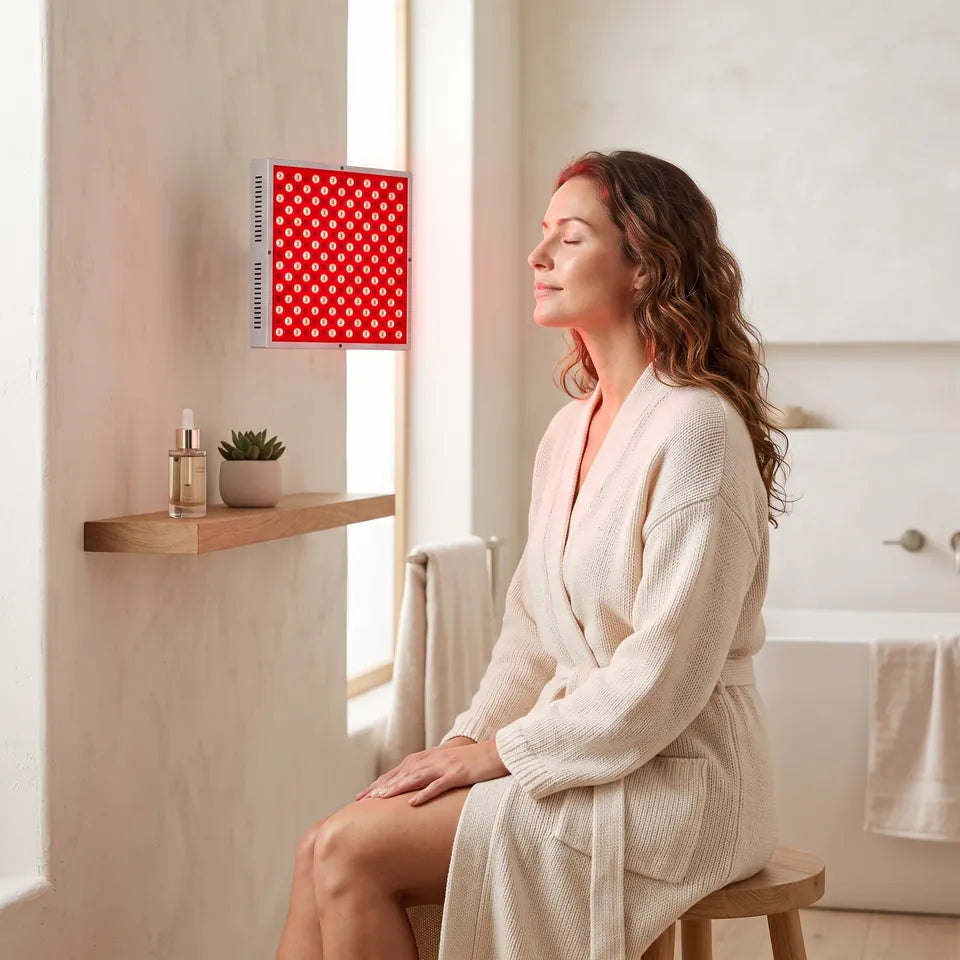 Skin
A morning skin ritual.
In a controlled trial of 136 adults, red and near-infrared light improved skin roughness and collagen density.
Wunsch & Matuschka · 2014 · n=136 -
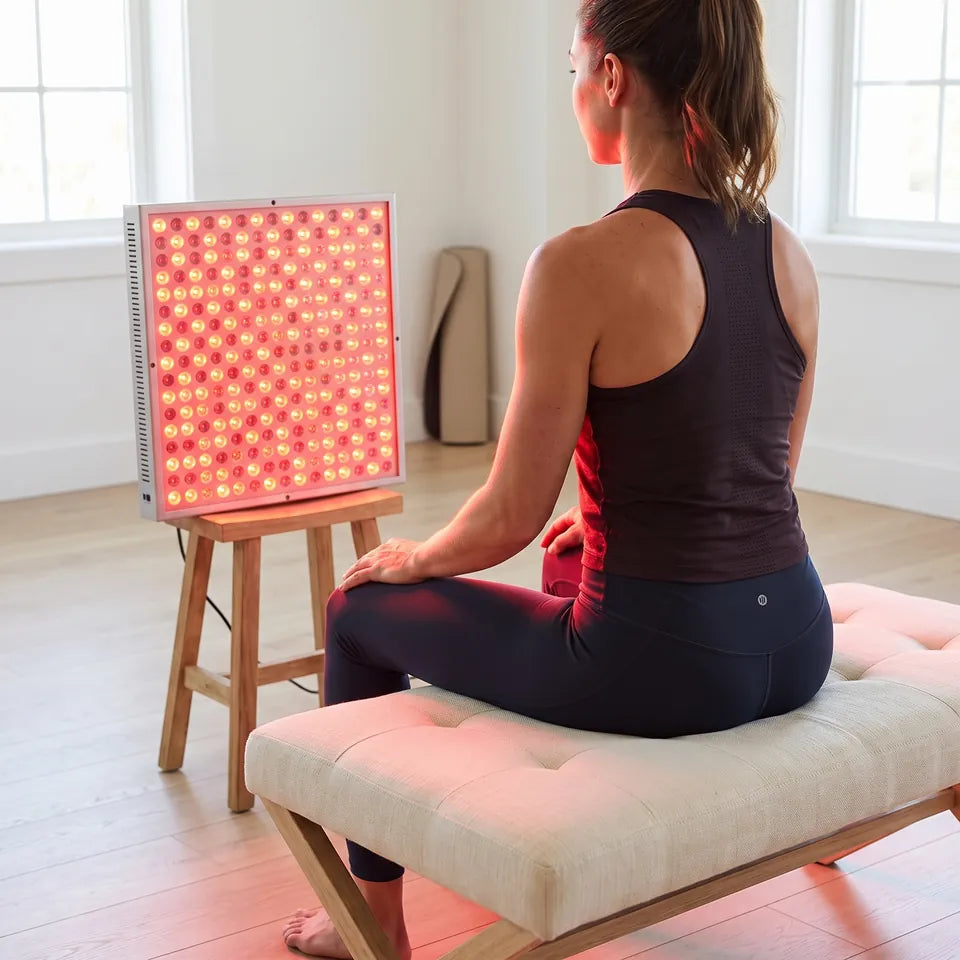 Training
Part of your recovery routine.
Across 39 trials, red and near-infrared light showed modest benefits for muscular performance — evidence quality very low to moderate.
Vanin et al. · 2018 · n=861 -
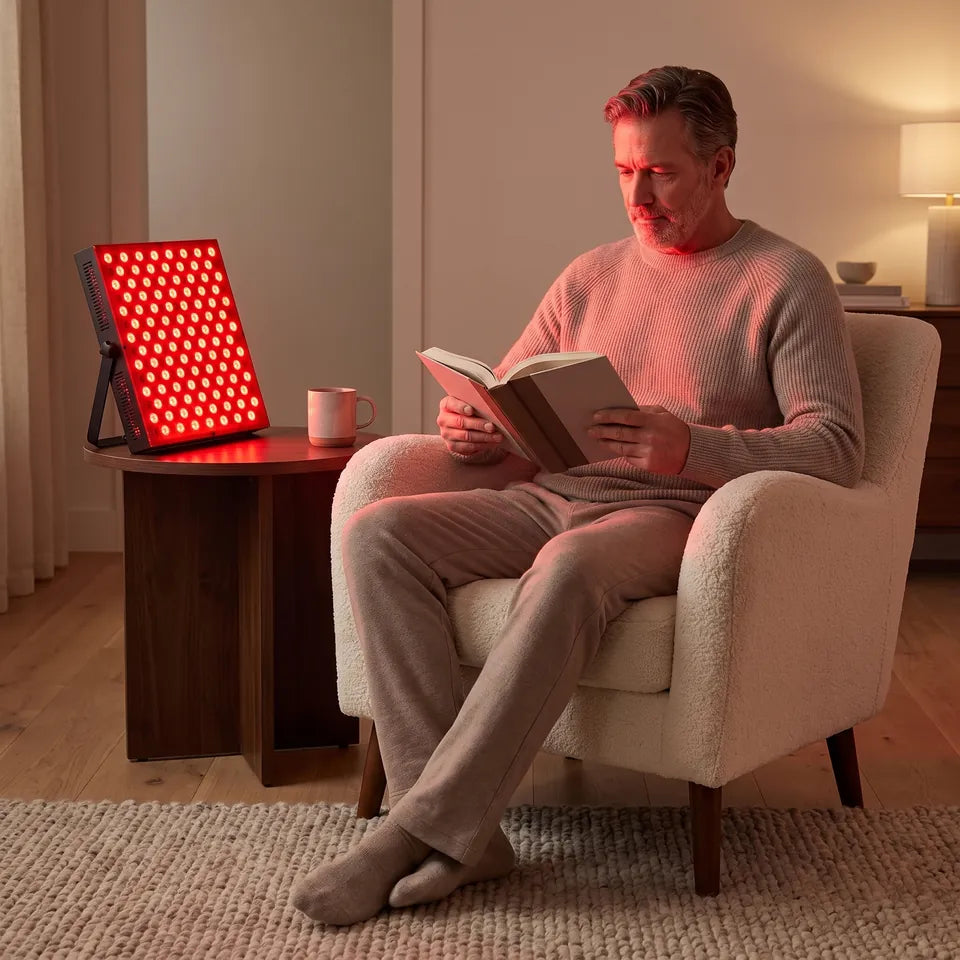 Routine
Ten quiet minutes.
Sit, read or stretch while the panel works — a simple ritual that fits before breakfast.
Studies used other red and near-infrared devices, and results vary. Don't stare directly into the LEDs. GroundingFlow red light devices are not intended to diagnose, treat, cure or prevent any disease.
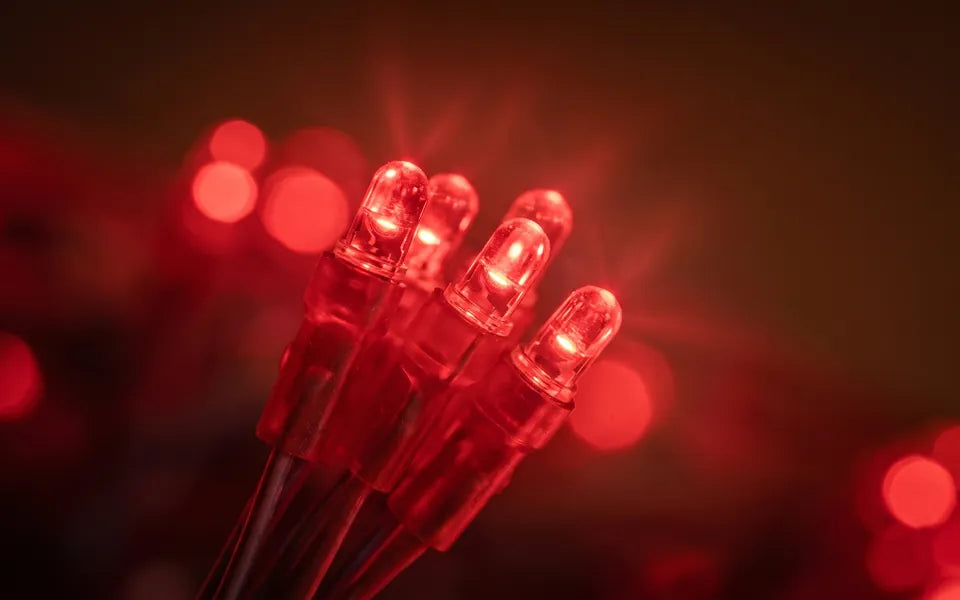
Two wavelengths. One routine.
The panel pairs 660 nm red light, which acts in the skin's outer layers, with 850 nm near-infrared light, which reaches deeper. Research points to an enzyme in your mitochondria — cytochrome c oxidase — as the main place this light is absorbed.
Early medical LED research was funded through NASA's small-business research program. Today it's studied in labs worldwide.
Ten minutes a day. That's the whole routine.
-
Step 01
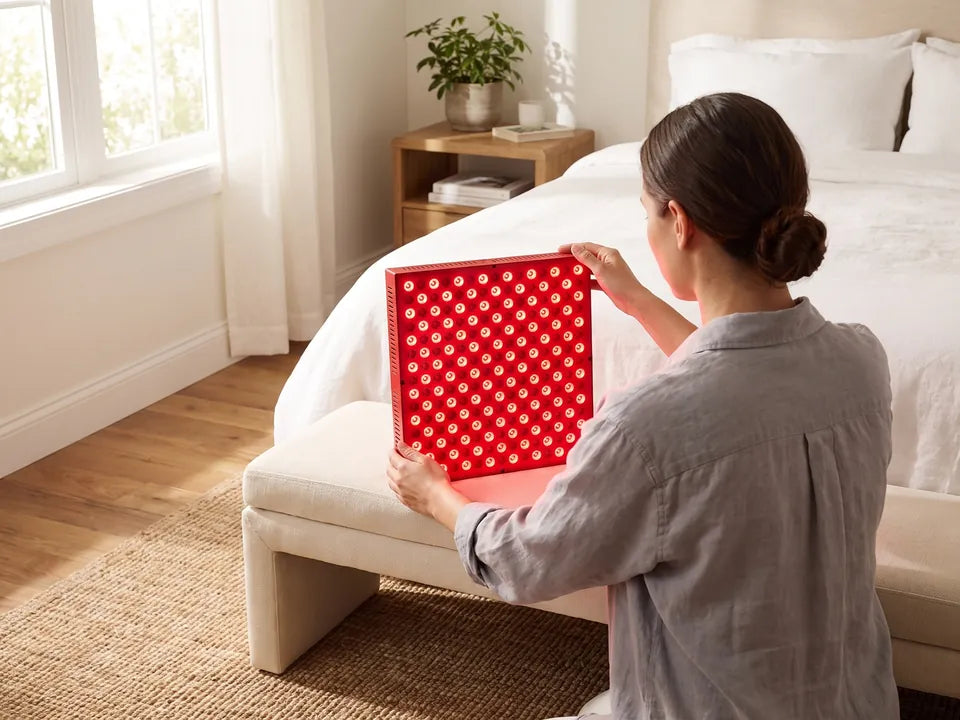
Set it at chest height
Stand it on a shelf, table or bench and plug it in.
-
Step 02
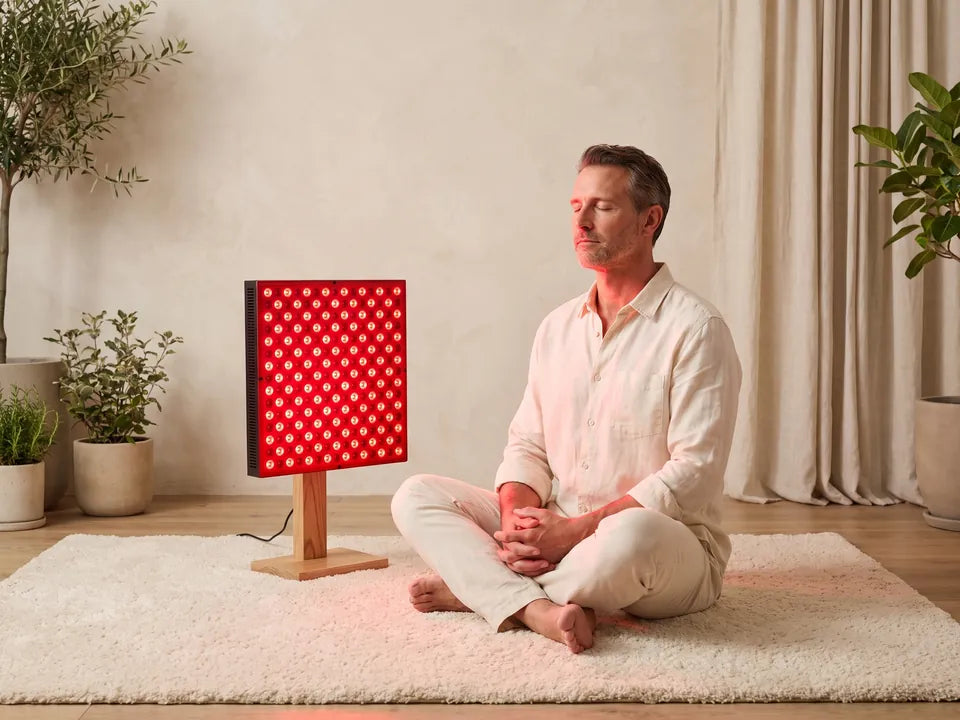
Sit 15–30 cm away
Relax, read or breathe for 10–15 minutes per area.
-
Step 03
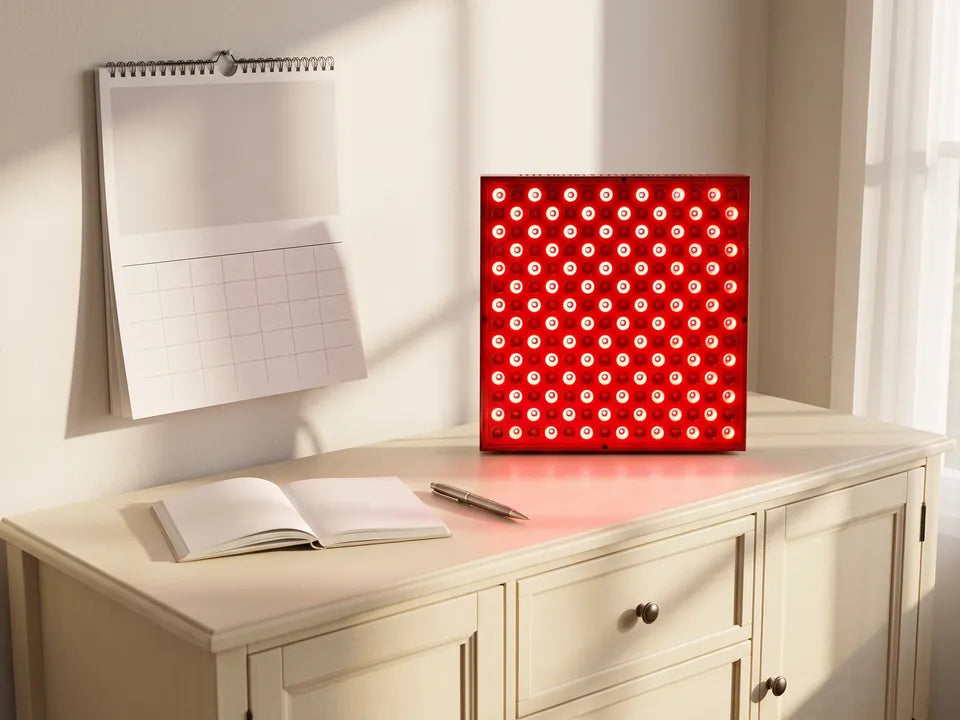
Make it daily
Same time each day — consistency beats long sessions.
Don't stare directly into the LEDs.
What the studies show. And what they don't.
Red and near-infrared light — photobiomodulation — has been studied for decades. The strongest consumer evidence is for skin; results for performance are modest. None of these studies used our devices, so we link every paper.
Promising for skin, modest for performance. Use it consistently and judge it for yourself over 90 days.
-
Skin texture & collagen
Red and near-infrared light improved skin roughness and ultrasound-measured collagen density compared with untreated controls.
Controlled trial · full-body light devices
Wunsch & Matuschka, 2014 -
Skin elasticity
633 nm and 830 nm LED sessions improved skin elasticity in a split-face study against a sham treatment.
Randomized · sham-controlled · split-face
Lee et al., 2007 -
Muscle performance
Across 39 trials, red and near-infrared light (655–950 nm) showed modest benefits for muscular performance. The authors rate the evidence quality very low to moderate.
Systematic review & meta-analysis · 39 RCTs
Vanin et al., 2018 -
How it works
Red and near-infrared light is absorbed mainly by cytochrome c oxidase in the mitochondria — the leading explanation for its effects.
Narrative review
Hamblin, 2018

Try it for 90 days.
Use it every day for 90 days. If it's not for you, contact us for a full refund.
- 90-day money-back guarantee
- Every study linked — no hype
- Free US shipping, tracked
- Real support: info@groundingflow.com
Is red light therapy safe?
Red and near-infrared LEDs don't produce UV light. Avoid staring directly into the LEDs, keep sessions to the times in the guide, and talk to your doctor first if you're pregnant, take light-sensitizing medication or have a light-sensitive condition.
How often should I use it?
Most people use it once a day for 10–15 minutes per area, 5–7 days a week. Consistency matters more than session length.
Where does the research come from?
We link every study on this page. They used a range of red and near-infrared devices, not ours specifically, and individual results vary.
What's the difference between 660 nm and 850 nm?
660 nm is visible red light that acts mainly in the skin's outer layers. 850 nm is near-infrared — invisible to the eye — and reaches deeper. This panel combines both.
Which plug do I need?
Choose your country's plug above — we ship the matching power cord for US, UK, EU or AU outlets.
How soon will my order arrive?
Orders are processed within 1–2 business days and ship with tracking. Delivery usually takes 8–10 business days to the US, Canada, the UK and Europe, and 5–10 business days to Oceania. US shipping is free, and international shipping is free on orders over $100.
What is your return policy?
You're covered by our 90-day money-back guarantee. If it's not for you, email info@groundingflow.com for a full refund.


